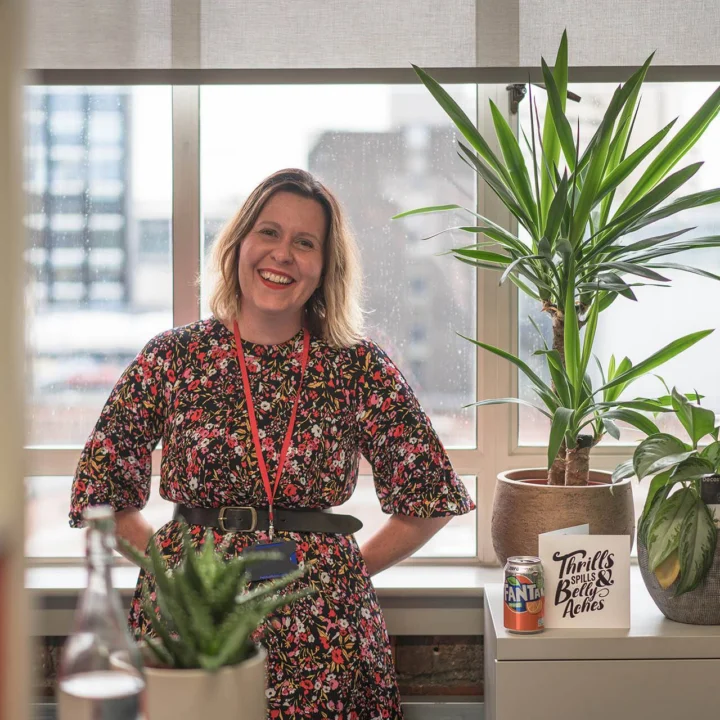
Water companies are under enormous pressure to modernise, meet increasingly demanding performance commitments, and deliver better outcomes for customers. But behind the headlines sits an incredibly complex operational environment, with huge amounts of data, legacy technology, and thousands of reports supporting decisions every day.
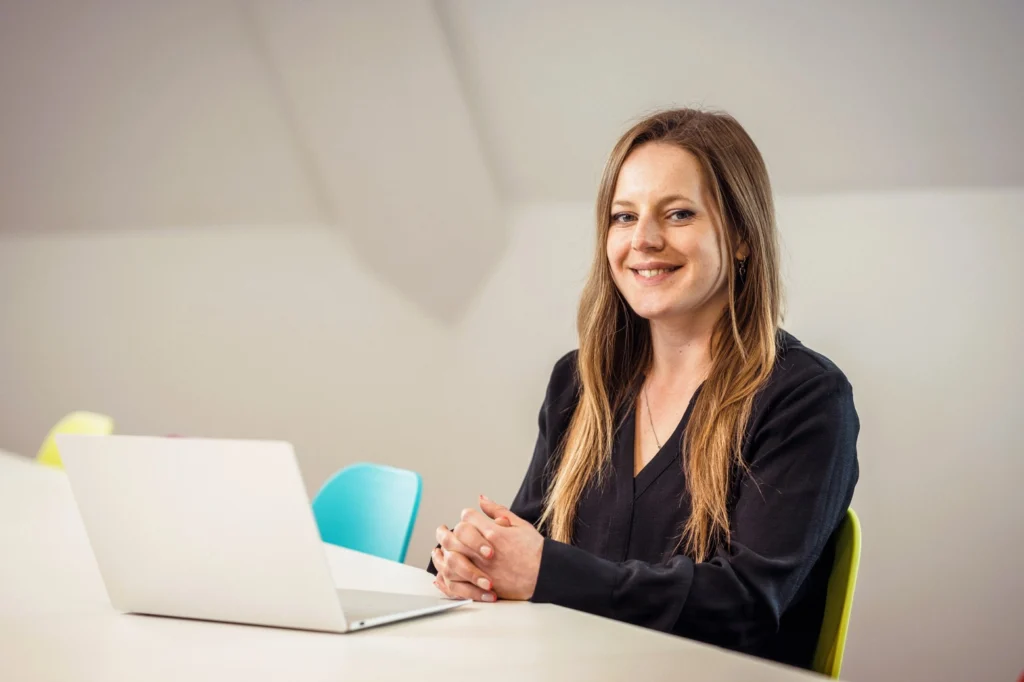
For our latest Spotlight interview, Nicola Thomson, our Head of Marketing, caught up with Eben Agati, one of our Business Analysts, who’s currently working on a major transformation programme at Yorkshire Water.
They covered:
- What transformation actually looks like inside a water company
- Why replacing legacy technology is only part of the challenge
- The important role business analysis plays in making sure investment in data and technology translates into something useful on the ground
(Oh, and also padel – something it turns out Eben is hugely passionate about!)
From accounting and audit to data consulting
Nicola: Eben, let’s start at the beginning. How did you end up working in data?
Eben: I actually started my career in accounting and audit. After a while, I realised the parts I enjoyed the most were the technology and speaking to stakeholders, so I moved into business analysis. I worked in global mobility and then for a connectivity business before joining Oakland Everything Data as a Business Analyst.
Data has been a common thread throughout all of those roles. Even in audit, we used data to understand what was happening and make decisions. As a Business Analyst, it became even more important, because data helps you have better conversations with stakeholders and understand what they actually need.
What does transformation look like inside a water company?
Nicola: You’re now working full time with Yorkshire Water. What does your role involve?
Eben: My role is focused specifically on reporting and insights as part of a much bigger transformation programme.
“Like many large organisations, water companies can have older legacy systems that have been in place for many years. When you move away from those systems and introduce new technology, you can’t just switch everything off and assume the job is done. People across the organisation still need the information that allows them to do their jobs.”
For operational teams, that might mean having the right information to make decisions in the field. For scheduling teams, it could mean being able to understand where people need to be sent. My job is to speak to those different stakeholders, understand what information they need, and make sure those requirements are built into the future reporting environment.
Find out how else our Business Analysts and Data and AI Consultants bring about tangible change for water companies by reading our Water Utilities page.
How to tackle one of the most common issues for water companies: The build up of thousands of reports over time
Nicola: In an organisation that size, there must be an enormous number of reports. Where do you even begin?
Eben: You can’t tackle everything at once. You have to break the organisation down into areas and speak to the people actually doing the work.
The starting point is quite simple: What reports are you using today and what do you need them to help you do? Once you understand that, you can start asking more interesting questions.
- Do we still need this report?
- Does the new technology make some of it redundant?
- Can we improve it?
- Can we consolidate things?
- Is there a better way of giving people the information they need?
That’s one of the opportunities transformation creates. It isn’t simply about recreating everything you already have on newer technology. It’s a chance to understand what people genuinely need and make things better.
Our relationship with Yorkshire Water
We’ve provided data and AI consultancy services to Yorkshire Water for several years. This includes the delivery of a data strategy across a broad set of areas as part of a complex, multiyear data transformation, as well as developing a bio-waste water solution that could distil a complex network of sites and production data into a minimum cost treatment schedule.
Legacy technology is only part of the challenge that water companies face
Nicola: Water companies are dealing with huge amounts of change at the moment. What have you seen as some of the biggest challenges?
Eben: Legacy technology is definitely one of them, but I think organisational complexity is just as important.
Water companies are huge organisations. There are lots of different teams doing lots of different things and that can naturally create silos.
One area might be doing some really useful work that another part of the organisation doesn’t know about. That can lead to duplication or mean good work isn’t followed through elsewhere.
Modern technology can create efficiencies, but technology on its own doesn’t solve that. You need to understand the organisation, how people work, what information they need and how everything connects. That’s where having an external perspective can be really useful.
At Oakland Everything Data, we’re able to work across different parts of an organisation and help join those things together rather than looking at one problem in isolation.

Data, regulation, and performance for the water sector
Nicola: There’s obviously a huge amount of regulatory pressure on water companies as well. Where does data fit into that?
Eben: It’s really important. Water companies have performance commitments that they need to measure and report against. That means they need reliable information to understand how they’re performing, identify where they may be falling behind and decide where action is needed.
Good reporting isn’t just about producing a dashboard. Ultimately, it’s about giving people the information they need to improve performance. That’s why getting the foundations right matters. If you’re investing in modern technology but people can’t get the right information out of it, you’re not going to realise the value of that investment.
The role of the Business Analyst in data and AI consulting
Nicola: So where does a Business Analyst fit into all of this?
Eben: I see the Business Analyst as the bridge between the business and the technical team. We speak to the people doing the job and understand what they need. Then we translate that into clear technical requirements that developers can build from.
Without that bridge, you can end up with technical teams spending a lot of time trying to establish requirements themselves, or with lots of back and forth between developers and business stakeholders. That slows projects down. A big part of my day is speaking to people, understanding what they need, and documenting it clearly. They’re probably the three core parts of what I do.
How to turn messy data into something useful
Nicola: What are you most proud of from the work you’ve done so far?
Eben: One of the things I enjoy most is helping somebody take an idea they have in their head and turn it into something tangible. I worked with one stakeholder who knew there was an opportunity to improve efficiency in his area, but he wasn’t sure exactly what the answer should look like.
We had a number of conversations, got a whiteboard out and started visualising what a dashboard could look like. We both suggested things, moved things around and gradually turned what was quite a messy collection of ideas into a clear requirement. Eventually you get to that point where someone can say, “Yes. That’s what I was trying to explain.”
For me, that’s one of the most valuable parts of business analysis.
The complex reality of the water sector
Nicola: This is your first role in the water sector. Has anything surprised you?
Eben: Definitely.
“Before working in water, you don’t necessarily appreciate the sheer scale and complexity involved in providing an essential service. It’s much more than water going into someone’s house and wastewater coming back out again!”
There are operational teams, field technicians, metering, asset management, scheduling, regulation, customer service, and all sorts of technology and innovation sitting behind it. I’ve had to learn quickly. A lot of that has come from simply speaking to people across the organisation and understanding what they do. I’ve also built my own documentation and even an acronym library because there are a lot of acronyms in water. It gives you a completely different appreciation of what’s involved in keeping such a complex service running.
Why water transformation needs more than technology
Nicola: If there’s one thing you’ve learnt from working on a transformation of this scale, what would it be?
Eben: Probably that the technology is only one part of it. You can introduce the newest systems available, but you still need to understand how the organisation works, what people need, how information moves between teams and what decisions people are trying to make.
For water companies, that’s particularly important because they’re balancing operational complexity with customer expectations and regulatory performance. The value comes when you connect those things together. That’s what turns a technology programme into genuine business transformation.

One last thing…
Nicola: Tell us something that your colleagues at Oakland Everything Data (and your clients) might not know about you.
Eben: I greatly enjoy padel.
Nicola: ‘Greatly enjoy’ feels like you’re deliberately avoiding the word obsessed.
Eben: Obsessed is a strong word! I’m trying to get more people at Oakland Everything Data playing and we now have a padel group chat. It’s a really social sport and surprisingly easy to pick up.
Once you know the rules, you can probably have a decent rally within about 20 minutes. I originally started because a friend messaged asking if I wanted to play padel. I thought it was something to do with swimming…
…it wasn’t.
How we turn water data into action at Oakland Everything Data
We work with water companies across some of their toughest data challenges, from data strategy and governance to transformation, analytics, Open Data, and the technology that underpins it.
What connects that work is a focus on making data useful: Helping organisations move beyond systems and dashboards to give people the trusted information they need to make better decisions, improve performance, and deliver better outcomes.
If you’re tackling a major data or technology transformation within water, talk to our utilities team about how we can help. Call us on +44 113 234 1944 or complete the contact form at the bottom of this page.
More of our data insights for the world of water
Turning data governance into £85 million of opportunity
Like many organisations across the utilities sector, our client is one of the UK’s largest providers of essential services. They operate in a highly regulated utilities environment where reliable data is critical to performance, compliance, and customer outcomes.
We were brought in to help them navigate increasing pressure to modernise their data estate. At the heart of the transformation was data governance: Ensuring data is trusted, well-managed, and fit for purpose across complex asset networks and service operations.
Why Open Data is the future of water regulation
Water regulation has always run on data. What’s changing now is who gets to see it, how fast, and what they’re allowed to do with it once they have it.
That shift from data as a compliance artefact to data as a shared, usable public resource is what’s turning Open Data from a regulatory tick-box into one of the most important tools the sector has for building trust, driving innovation, and, increasingly, powering AI.
Oakland Spotlight Series: Zoe Shaughnessy talks utilities, Open Data, and olympic weightlifting
Fancy another Spotlight interview just like this one? Meet Zoe Shaughnessy, one of the Senior Business Analysts at Oakland, whose enthusiasm for the utilities sector is unmatched, having spent the last 18 months working on Open Data.
What Ofwat’s AI adoption plan actually asks of water companies
Ofwat published its first AI adoption plan for the water sector in June 2026. Read past the headline, and instead of it being a plan about artificial intelligence (AI), it’s one about data. Whether it can be trusted, who owns it, and whether a company can show its workings when a model produces an answer.
Transforming data governance for a major UK utility
Our client, a prominent water supply and treatment utility company in the UK, boasts over 2,500 employees, a customer base of 5 million and impressive annual revenue of £1 billion. Servicing one of the largest counties, their operations faced challenges stemming from a complex data environment, hindering efficient operations and decision-making.
They approached us for assistance in addressing these paint points, with the aim to achieve the following goals:
- Establish confidence and trust in data through right-sized data governance and data quality frameworks
- Enhance business operations and asset efficiency by ensuring accessibility, usability, and quality of insights derived from data
- Establish a data-driven culture and an insight-led workforce through data governance training and support
Get in touch
For more information on how we can help you call +44 113 234 1944. Or alternatively, if you would simply like to know more about what we do please fill in the form below and we will be in touch as soon as we can.