Diving into the Details with
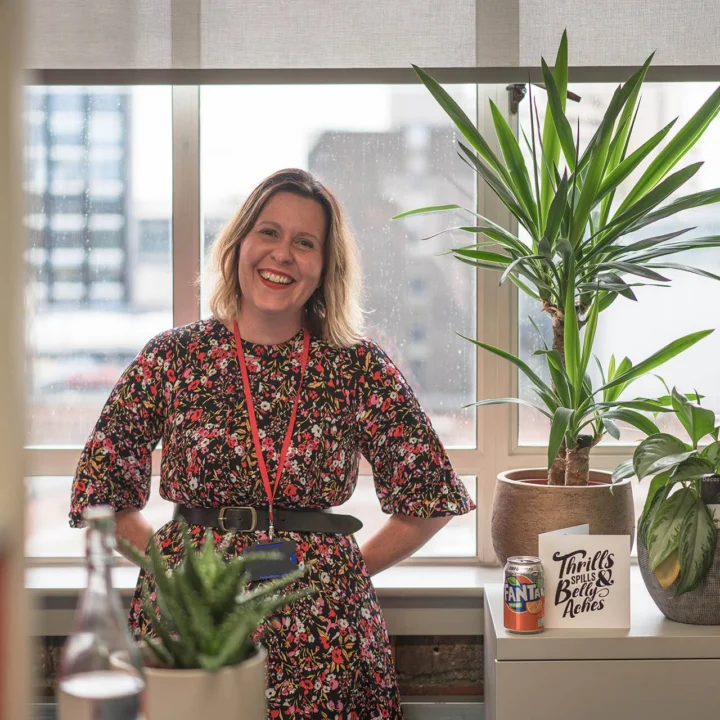
Zoe Shaughnessy, Senior Business Analyst
It’s time for the second installment of our Spotlight Series. This time it’s Zoe Shaughnessy in the hotseat. Zoe is one of the Senior Business Analysts at Oakland. In this spotlight Zoe speaks to Nicola, our Head of Marketing about her enthusiasm for the utilities sector and the last 18 months working on Open Data.
From HR to Data Analysis
Nicola: Hi, Zoe! So you’ve been here at Oakland for three years now, have you always been a Business Analyst?
Zoe: No, my background’s in human resources, where I worked in HR management information. I moved into a Business Analyst role for technology transformation projects, and now work at Oakland as a Data Business Analyst.
Award-Worthy Open Data Passion
Nicola: You work predominantly with our utilities clients, and we know you’re particularly passionate about Open Data. And we’re super proud of you being a finalist for the Women In Utilities Awards this July for your work. Why have you chosen to focus on Open Data? Why does it matter to you so much?
Zoe: At its core, Open Data is all about innovation and transformation.
“It enables anybody and everybody to be able to freely use data whenever they want, and however they want.”
Zoe: And that’s particularly critical for places like academic institutions who are working to solve some really big climate and business problems – you can’t do that type of work without getting lots of brains together! That’s why I wanted to work alongside utilities to support them to safely release data in a standardised fashion that can be used for any purpose, by anybody, at any time.
Solving Open Data Challenges for a Major Utilities Provider
Nicola: Can you tell us more about your Open Data work for Yorkshire Water?
Zoe: Yorkshire Water came to us with a problem – they wanted to be able to release data to Stream, and build their own capabilities. They’d been involved in a collaboration project with other water companies and didn’t know how to start releasing data to Stream. So we started working on an end-to-end process map to help Yorkshire Water answer questions like:
- How can we safely release data?
- Who needs to be informed?
- Who needs to be consulted?
- Where is the data coming from?
- How has it been handled?
- How has it been cleaned?
- How has it been moved forward?
- What kind of checkpoints does it need to go through to get it in a state where it can be released? And then once it’s been released, how do we refresh it and renew it and make sure that it’s still fit for purpose a year down the line?
I worked on getting that process together. In the process of doing the process (for want of a better term), I came across a lot of other things. I thought, actually, you probably need to look at:
- A set of principles
- A strategy
- How you’re going to govern it
- Whether you need any focus groups
- A full sign off process (i.e. who’s giving the rubber stamp to say the data is okay to release, that there’s no Personally Identifiable Information (PII) in it, that there’s nothing we need to be worried about)
And then you probably need a whole piece at the other end: If you’re going to release data, you need to work alongside the users, and understand how they are using the data so that you can reap the benefits of any innovation as well.
“Utility companies really need an innovation plan and a link with local universities, so that all the amazing things people are doing with that data can come back to them, allowing them to use it and add value to their operations.”
Head to Zoe’s blog, Open Data in Water Utilities: How to Set Data Up for Success, for a closer look at Open Data in the utilities sector, including its challenges, its opportunities, and its value.
Going the Extra Mile
Nicola: You went above and beyond what the brief was – it’s made a difference to society and you’ve been able to grab hold of it with both hands. So we’ll come back to why it matters to you so much?
Zoe: I think it’s just important for the wider world, which sounds really ‘airy fairy’. But I think there’s so many big, massive problems in terms of the environment, for example, that you can’t solve by yourself, as one company, or as one type of company.
“We all need to start pulling together in the same direction to solve these really difficult problems. The only way we can do that really is with data. And we can only really do that if we can all freely use and exchange data and knit stuff together to find answers to these problems. (Hopefully!)”
A Day in the Life of a Senior Business Analyst at Oakland
Nicola: So, what does your day-to-day look like as a Senior Business Analyst specialising in utilities at Oakland Everything Data?
Zoe: Day-to-day at the moment, I attend operational and strategic meetings. There’s a lot of work around how we do Open Data as an individual water company and as part of Stream. We also sit in part of the steering group for Stream as well, so there’s a couple of those meetings that we go to every week.
I also speak to stakeholders about the upcoming use cases that we’d be publishing, and about various things that we’re releasing and we’re moving forward. At the moment, we’re working on an Open Data portal and designing it, so we’re drawing up wireframes and finalising our requirements to make sure that it’s in line with what the stakeholder wants and expects. We’ll then move on to getting it all agreed and put through the correct forums to move it to the next stage. At the moment, the portal is one of our key focuses.

Making Waves with Stream
“Oakland Everything Data works really closely with Stream and plays a key part in the work that they do.”
Nicola: Can you talk me through what your relationship is with Stream, and how you are basically a big deal in the water industry now?
Zoe: I’m definitely not a big deal, that’s for sure!
Last year, we hosted ‘Open October’, which was a really great way to bring all of the water companies together at our HQ in Leeds to work on things together.
We talked about the strategic direction of Stream and how to move it forward. Oakland sits on the steering group of Stream as well, so we’re involved in the key, high-level decision-making parts of that.
We’ve also helped to shape the longer term publishing plan by sharing our environmental information regulations requests. This means we can help Stream to answer the questions that are being asked, rather than just shouting into the void.
We get requests from people about the data and information they want, so we thought, ‘why not start by releasing that, rather than just things we think might be useful?’.
“Let’s release things that are actually useful to people first.”
Who Uses Open Data in Utilities?
Nicola: Who is requesting this type of information? Academics? The general public? Anyone and everyone?
Zoe: Yes, anyone and everyone and anyone. We have people from academic institutions, other water companies, various other institutions, local councils, national farming unions, for example…
…Anybody and everybody! Special interest groups are another one, and it’s always really interesting to find out what they’re up to.
Nicola: Can you share an example of data that’s been requested and how we’ve been able to release it to the public?
Zoe: Reservoir levels is a good one because it’s been in the public eye. We had a lot of problems this year with drought and where we had either a lot of rain all at once and we weren’t able to capture it, or no rain. We didn’t have enough rain to fill our reservoirs, so we published our reservoir levels. And that’s been really a good thing because it’s meant that utilities providers:
- Haven’t had to do as much administration themselves to answer all of the queries – they could just redirect people straight to the website.
- Could get the data exactly when they wanted and how they wanted it, as easy as that.
It also helped shine a light on Stream, the shared platform, because people could just go there and have all of the data at their fingertips – e.g. ‘What are the reservoir levels of Swinsty?’.
Nicola: That’s a good one.
Passion, Performance, and Pride
Nicola: So, what are you most proud of from your Open Data work?
Zoe: All of it, I guess! I’m really proud that we were involved in the annual performance report for Yorkshire Water last year – that we, and our roadmap, were included as part of that. I think it’s a really exciting, really good thing for this organisation to have and to move forward. And I will be very proud when Yorkshire Water’s Open Data strategy is published, as we’ve been heavily involved in it.

One Last Thing…
Nicola: Can you now tell me something that people don’t know about you?
Zoe: I used to have four cats, and it was absolute pandemonium. Oh, and I own a pair of weightlifting shoes signed by Emily Campbell, a British weightlifter. I’m trying to qualify for the English Championships in Olympic weightlifting.
Nicola: Very cool! Thanks, Zoe.

Feeling Inspired?
Whether you’re a utilities provider looking for support with Open Data or you’re interested in a career in Data Analysis, we’re here to help.
There’s Plenty More Where This Came From…
If you found this interesting, stick around on our site – there’s lots to learn, from case studies about our work with utilities to videos on Everything Data.

Turning Data Governance into £85 Million of Opportunity
Like many organisations across the utilities sector, our client is one of the UK’s largest providers of essential services. They operate in a highly regulated utilities environment where reliable data is critical to performance, compliance, and customer outcomes.
We were brought in to help them navigate increasing pressure to modernise their data estate. At the heart of the transformation was data governance: ensuring data is trusted, well-managed, and fit for purpose across complex asset networks and service operations.
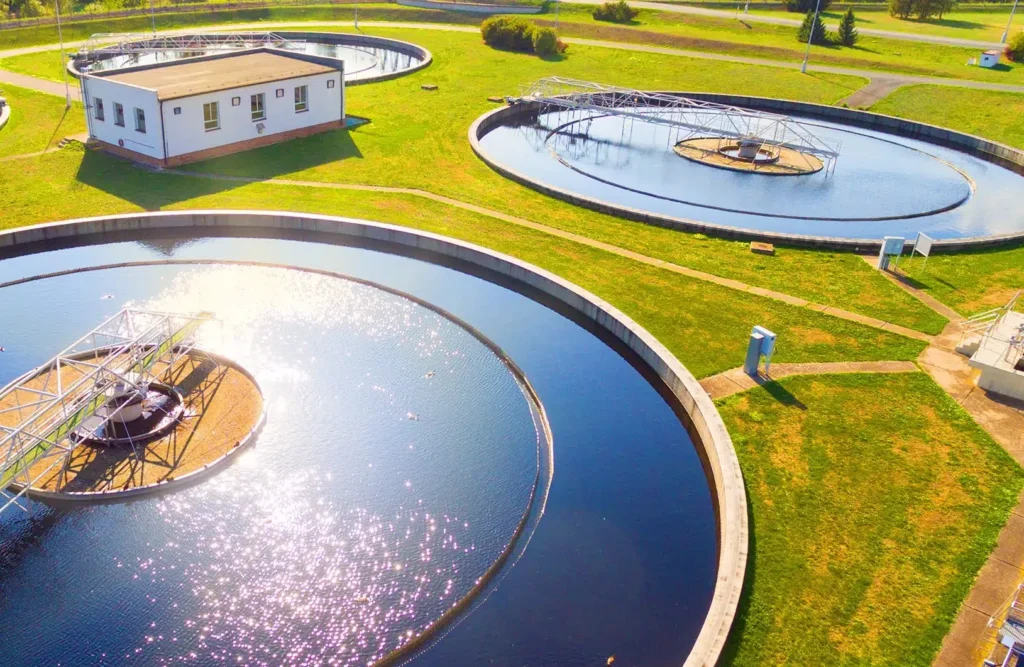
Executing a Data Strategy for Yorkshire Water
The vital delivery role we provided to Yorkshire Water in executing a data strategy across a broad set of areas within the data transformation initiative, resulting in an ROI of £150mn+.

Oakland Spotlight Series: Rajan Chavda Discusses MS Fabric
For our first Spotlight interview, Nicola, our Head of Marketing, sat down with Rajan Chavda to discuss how Microsoft Fabric is paving the way for analytics and AI adoption, the shift from infrastructure management to plug-and-play analytics, and why the single source of truth remains the enterprise’s main goal.