
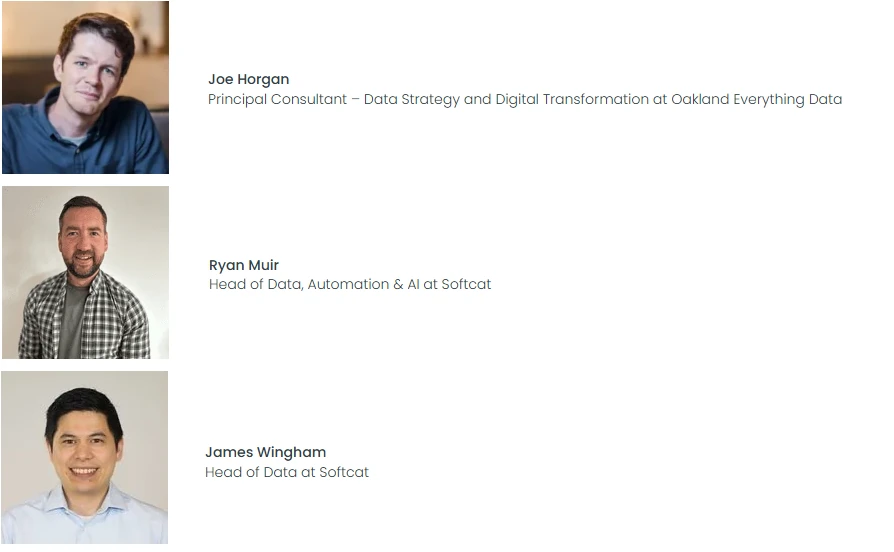
Who did we have on the panel?
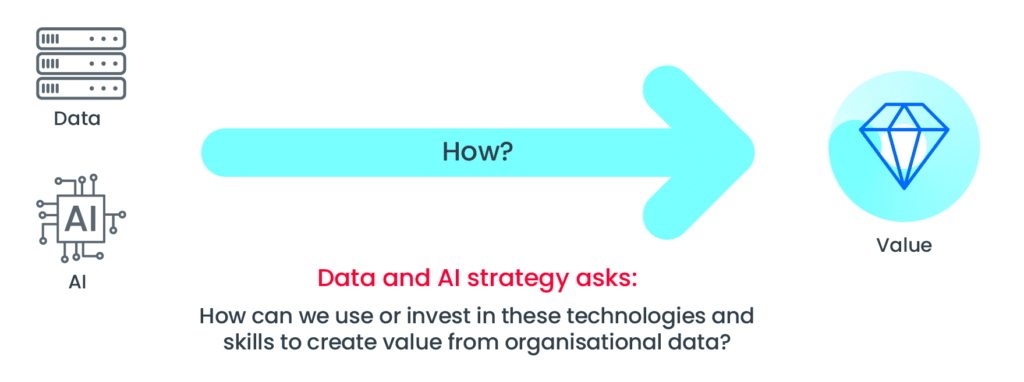
Defining your future is a strategy challenge, not a technology one
The session kicked off by talking about what it means to ‘define your future’. Joe stated that we’re fundamentally looking at data strategy – I.E. how an organisation should look to unlock value from data, automation, and AI. While technologies are more powerful and accessible than ever, value doesn’t emerge by chance.
It’s not enough to simply ‘get started’ with tools, because impact is rarely delivered without a clear plan. That’s where strategy comes in. It provides direction, prioritisation, and credibility, three elements at the core of moving any organisation forward. So wherever yours is on its maturity journey, value should be the primary driver.
“The context around defining your future is that we live in an incredibly exciting era in the field of data automation and AI.
“We’ve never had more technologies available to us. We’ve never had more skills and awareness of this. There’s never been more opportunity.
“But that comes with a double-edged sword – there’s also disruption. We know that our business models need to change and we need to bring our people along on that change curve.
“So when I say ‘define your future’ I’m really talking about strategy – and how we drive value from data and AI.”
Joe Horgan, Principal Consultant – Data Strategy and Digital Transformation at Oakland Everything Data
Value can’t be broadly defined – it’s context specific
There’s no one size fits all or universal definition of value in data and AI. What matters depends on an organisation’s purpose, industry, and strategic goals.
For instance, financial regulators focus on risk, harm prevention, service quality, and scale, whereas financial organisations prioritise fraud, risk, and customer insight. Universities emphasise student experience and research impact, which differs from the focus on asset optimisation, predictive maintenance, and digital twins in utilities.
“Things don’t happen by chance. If you don’t have a clear plan and vision, it’s going to be really hard to get that value.
“Wherever you are on that journey – whether you’ve already got some kind of strategy in place around data automation and AI or you’re just starting to think about having one – value should always be the first consideration that drives the development of the strategy and the definition of your future.”
Joe Horgan
What it comes down to is that value can’t be copied or commoditised.
Each organisation must define what success looks like for itself. At Oakland, our data consulting always starts with asking the client ‘what does value look like for you?’ – and we’ve learnt that the answer can be radically different in different places.
Defining data value
For instance, we worked with the UK’s regulator in charge of upholding the public’s information and data privacy rights, the ICO on an exciting data strategy project where they needed to set an example for the industry.
But that’s totally different to where our financial services clients want our focus, which may be around predicting the risks of fraud or understanding new market segments.
And that’s different again for our water utilities clients, one of whom we’ve supported with a strategy on how they improve predictive maintenance and better manage issues like leakage.
“Value is not a tradable commodity. It’s not just something you can stack up generically in a corner.
“Value only has meaning in your organisation in the context of what your organisation is trying to achieve, its purpose, and its strategy.”
Joe Horgan
How to make meaningful change for data and AI success
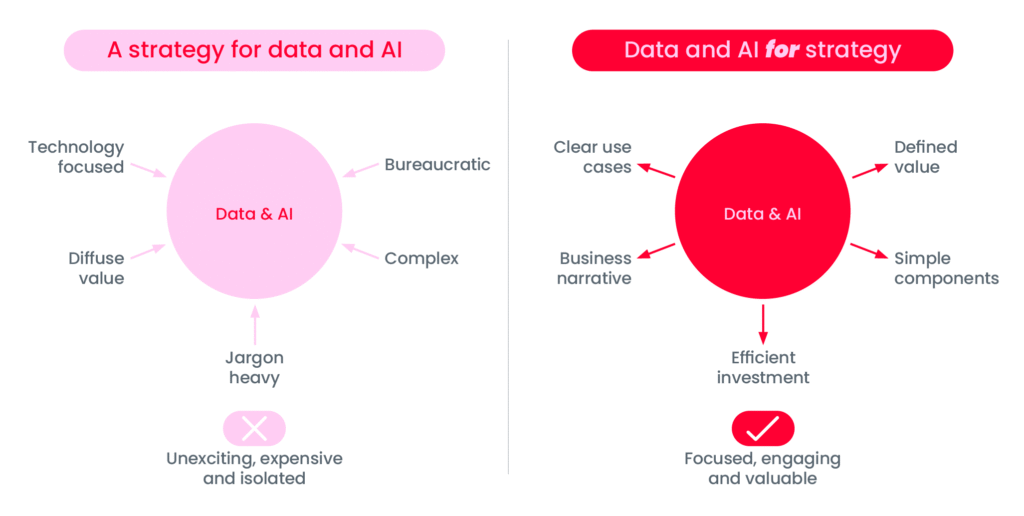
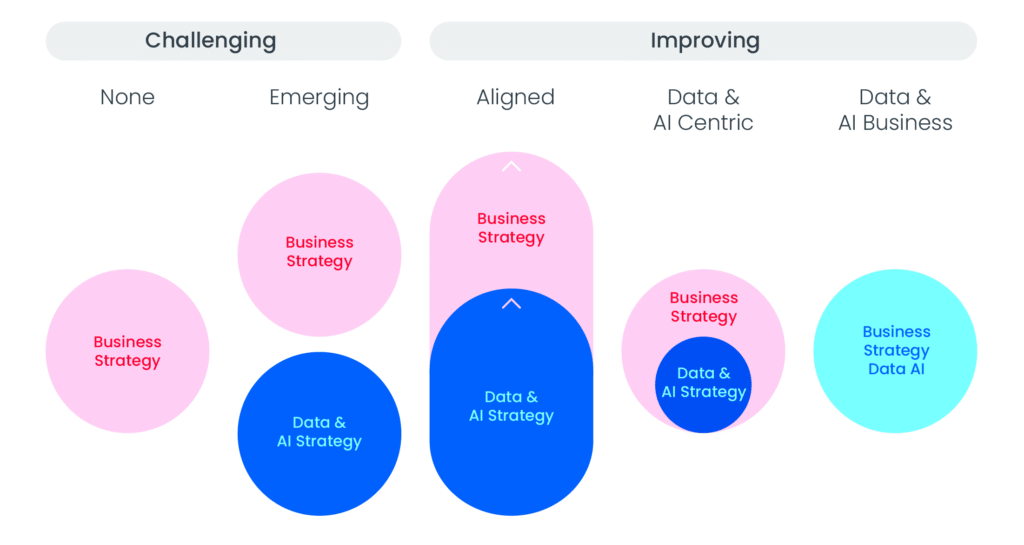
Rather than merely ‘aligning’ data and AI initiatives to business strategy, organisations should aim to actively drive strategy through data and AI. Increasingly, these capabilities are at the foundation of wider business activities, like digital transformation, customer experience, and operating models. But you can’t get these off the ground without two important elements: organisational outcomes, which require clarity and planning, and leadership and investment reality.
Organisational outcomes
These may look like:
- Competitive advantage
- Improved service delivery
- Better customer and employee experiences
- More scalable and efficient operations
Leadership and investment reality
To get change over the board, leaders need:
- A compelling story, business case, and roadmap to unlock funding
- To understand that data and AI initiatives can’t succeed as side projects
- A joined-up strategy to enable them to communicate clearly with boards and stakeholders
“Having a joined up plan to unlock value is one thing. Being able to communicate that outwards is crucial if you want to get the agenda moving at scale.”
Joe Horgan
Remember: A complete data and AI strategy is more than a vision slide
The panellists went on to highlight one of the most common recurring failures in data and AI roadmapping: mistaking a high-level vision for a full strategy.
Organisations must account for several elements to define the future, including:
- Vision – where the organisation wants to go and why, i.e. the value you think it’ll bring.
- Case for change – the gaps and constraints the organisation has, which show why investment is needed.
- Use cases – what are the tangible problems you can solve?
- Strategy and roadmap – how you’re going to make this change happen, what will be delivered and when.
- Target operating model – translating the strategy into reliability via people, processes, and technology.
Without this full answer, you risk losing momentum and confidence – fast.
Challenges are normal and to be expected
No organisation has ever started with perfect data or platforms – so don’t pressure yours to, either.
“I’ve never met an organisation who says ‘we are absolutely happy with every aspect of our data’. (And I’ve met literally hundreds!)” Joe Horgan
Joe spoke of a range of typical challenges encountered on the road to AI and data success, from data silos and fragmented systems to platform or infrastructure limitations, cost concerns (especially around cloud and GenAI), and data quality, security, and trust issues.
The advice? It’s absolutely fine to have challenges. Just remember they aren’t failures, but the very reason to define a strategy. A clear baseline enables realistic expectations and justifies investment.
Strategic pitfalls to avoid for data and AI success
However, there are mistakes to be mindful of – ones that we’ve seen derail the success of a strategy, time and time again.
- Unclear value – we’re talking vague benefits with no measurable outcomes rather than what metrics will move and what use cases we can solve, for example.
- Fragmented strategies – ones that are disconnected from other initiatives involved in digital, operating models, or user experiences.
- Partial answers – presenting a vision without a plan/substance behind it, like having a business case without a narrative.
- ‘Jam tomorrow’ roadmaps – where technical leaders evangelise a strategy that loses sight of what the wider organisation is interested in.
- Technology bias – strategies that read like shopping lists rather than transformation plans that account for people, processes, and use-cases.
If you take anything away from this webinar round-up, it should be this: successful strategies address people, process, culture, and experience, not just tools.
“Putting a comprehensive and compelling strategy together isn’t easy. That’s one of the reasons people turn to Oakland Everything Data for help.” Joe Horgan
Five principles for AI and data success
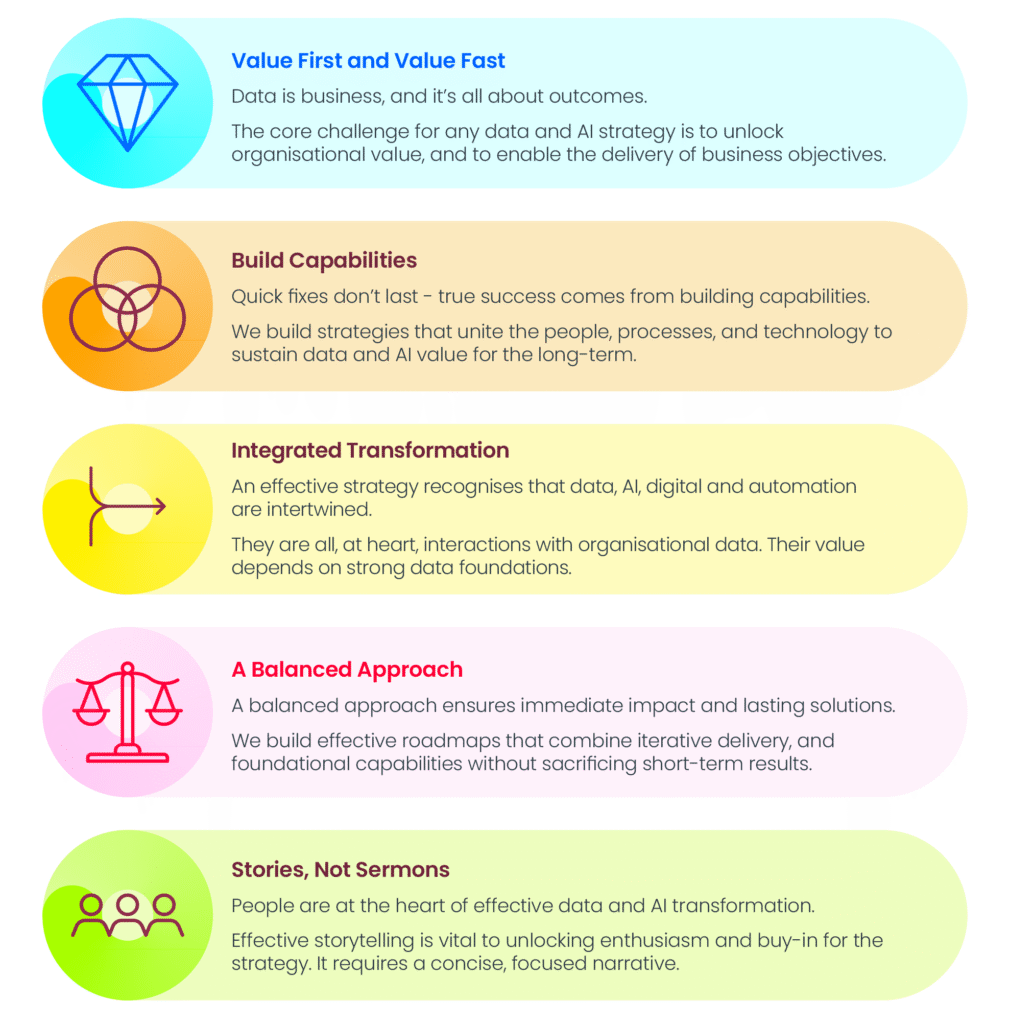
Joe moved on to translate what this looks like in real life and explain our approach to defining a data and AI future. It’s based on five principles:
- Value first, value fast. Anchor everything in value and deliver early ‘reasons to believe’.
- Build capabilities, not just solutions. Remember that sustainable value comes from people, process, and technology working together. If you want your strategy to stick and add value for the long run, think about the foundations and capabilities you’re building in the organisation.
- Integrated transformation. We don’t give soloed answers and data and AI automation – they must connect with, and fit into, wider digital, customer, and organisational change.
- Balanced delivery. Combine short-term value with long-term foundational improvement – AKA value first, and value fast.
- Don’t forget the story. Data strategy is a storytelling challenge because we’re trying to explain the relevance of complex technical activities with fast-moving technologies in a jargon-heavy field. You need to spend time thinking about the best way to narrate this journey so it resonates beyond technical teams.
Causes of data and AI failure
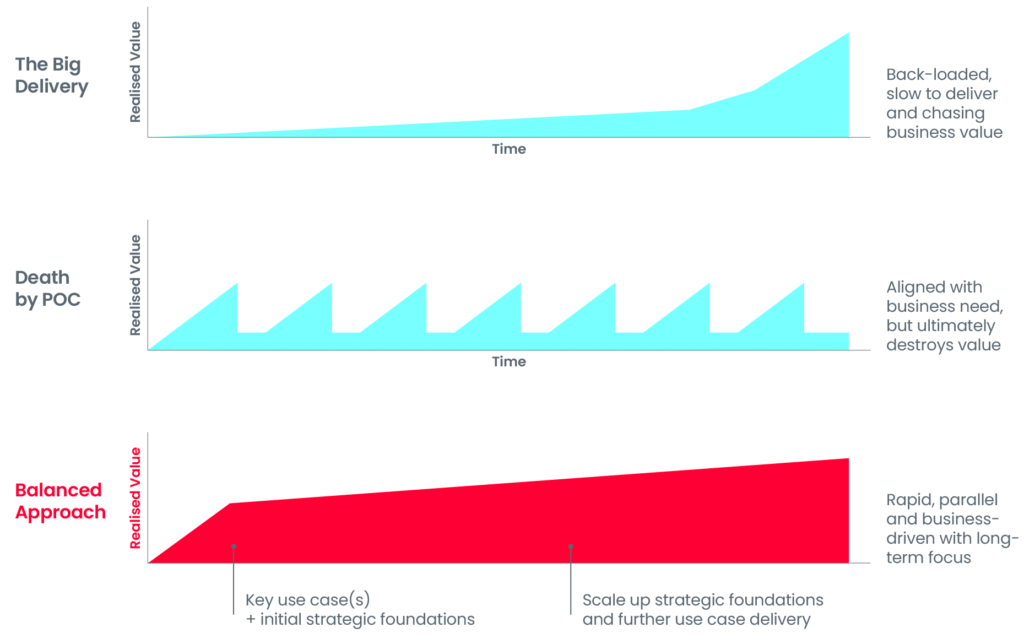
The panel went on to talk about how taking a balanced approach is better than an extreme one. For instance, years-long ‘big bang’ programmes that are delivered too late, which leaves everyone fed up. Or endless proofs of concept that never actually influence business reality.
What you’re after is a more balanced approach, one that shows value in there here and now. When your people realise the value early on, it’s far easier to build momentum and get buy-in from stakeholders to gain the steady investment you need in core capabilities.
Real world experience from Softcat
So, that’s what we do in theory – but what does it look like in practice?
Ryan and James shared how Oakland supported Softcat on its journey to define and deliver its data strategy to give them a competitive advantage in the market.
“You may not be aware of this, but Softcat actually went to market to evaluate data and AI consultancies to support our own internal data strategy and digital transformation.
“Oakland was selected as the winning partner and did such a brilliant job that Softcat decided to make their first acquisition – which is when our partnership was truly born. It’s fair to say we’ve seen firsthand just how good they are in this space.”
Ryan Muir, Head of Data, Automation & AI at Softcat
“We invested in tools such as master data management, cataloging tools, and reporting.
“It’s important to understand that in any data strategy, data isn’t the sole responsibility of one person. Everyone has a part to play.
“We worked with different department heads to understand what they wanted the future to look like, which helped us build support for our strategy.”
James Wingham, Head of Data at Softcat
Softcat identified a gap in data leadership, then started to build its data capabilities within four areas: data management, governance, and analytics and insight.
In 18 months, the team had trebled and with our help, identified that good data was vital to achieving their strategic intent.
Early wins followed, which addressed ROI pain points while enabling future AI use cases.
The key takeaway? Data isn’t the responsibility of IT only – everyone must contribute.
“Without Oakland’s help, we wouldn’t have known where to start and we most probably wouldn’t have started this journey yet.
“I owe a lot to Oakland – particularly Joe – for helping us achieve all the success to date on our data journey.”
James Wingham
The difference between poor, average, and great data strategies
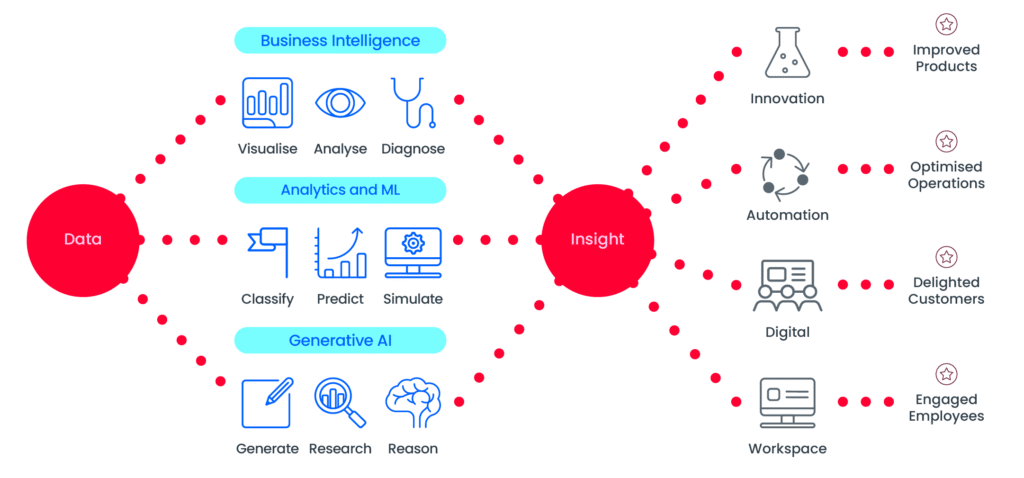
So, how do you know if the data strategy you’ve been working on is actually set up for success? Joe stated that most organisations ‘do data, but only the great ones turn it into a competitive advantage that feels effortless to the end user’. He went on to share what differentiates a poor strategy from an exceptional one.
Poor data strategies tend to be very reactive to one problem. They’re siloed, low trust, spreadsheet-driven, and without much thought about long-term outcomes. They become better/’good’ with centralised platforms, better visibility, and some governance. But there’ll be uncertainty about next steps – a core differentiator between a ‘good’ and ‘great’ data strategy, which can be characterised with:
- Intuitive, trusted, and embedded data
- Data-literate users
- Decisions powered by AI and automation
Ultimately, a great strategy turns data into the engine of the business. (See how we designed a data strategy and roadmap for RAW Charging that empowered automation and scale, improved data culture, and drove timely, consolidated insights: RAW Charging case study.)
To wrap up
As the webinar came to a close, Joe Ryan, and James reiterated the key takeaways from the session on data and AI success.
- Data and AI are now core organisational capabilities, not optional or niche.
- All data and AI decisions should be guided by value first and value fast.
- A successful roadmap balances quick wins with long-term foundations.
- Defining the future requires a complete, credible story, not just a vision.
- The biggest risk is doing nothing. So if you’re in this boat, reach out to our team for friendly guidance on where – and how – to get started.
Q&A
How to prove AI ROI?
Speaking pragmatically, remember that not all users want to understand the technology. They want to understand the impact on them and what they’re going to get out of it, so try and relate it back to them and their strategic intent as much as you can. Early AI ROI can usually be found in/proven by:
- Focusing on areas with better data to unlock some early value
- Using GenAI to highlight and fill data gaps, so the data can be put to better use
- Fixing data that undermines high-value processes
What’s the role of citizen development in data and AI success?
Citizen development should be enabled, not blocked! James says, “What we’ve started to do at Softcat is bring in the concept of a ‘centre of excellence’.” It’s where Softcat unites overall governance, principles, and ownership in a central place to allow users (citizen developers) within the business to work with the excellence team to make sure they’re abiding by Softcat’s principles.