Microsoft Fabric is moving quickly, but some of the most important developments are happening in the foundations of the platform.
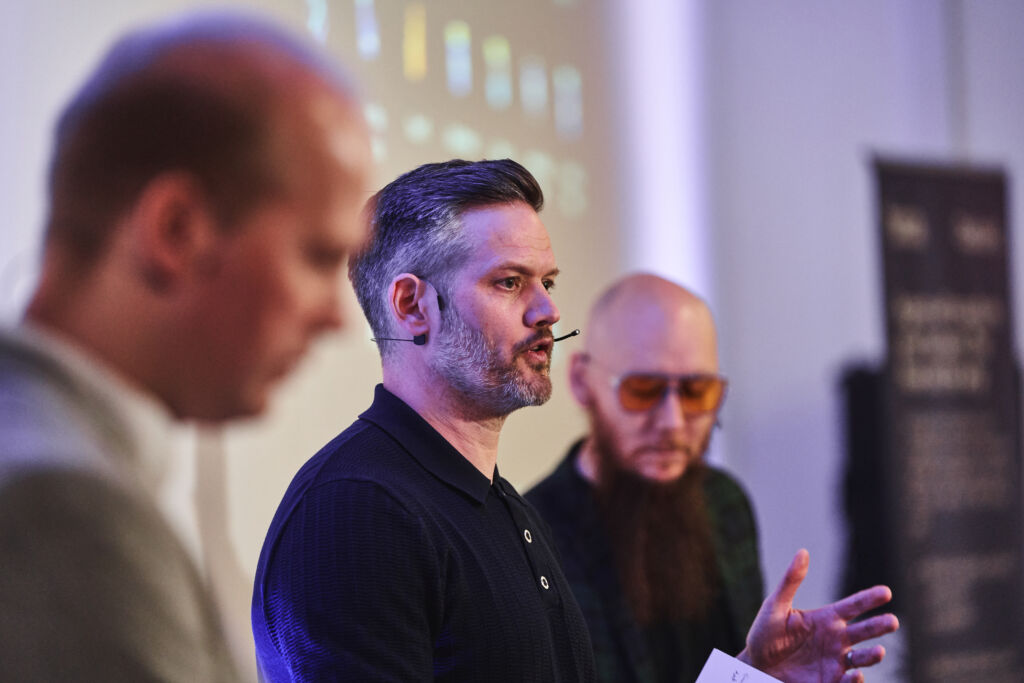
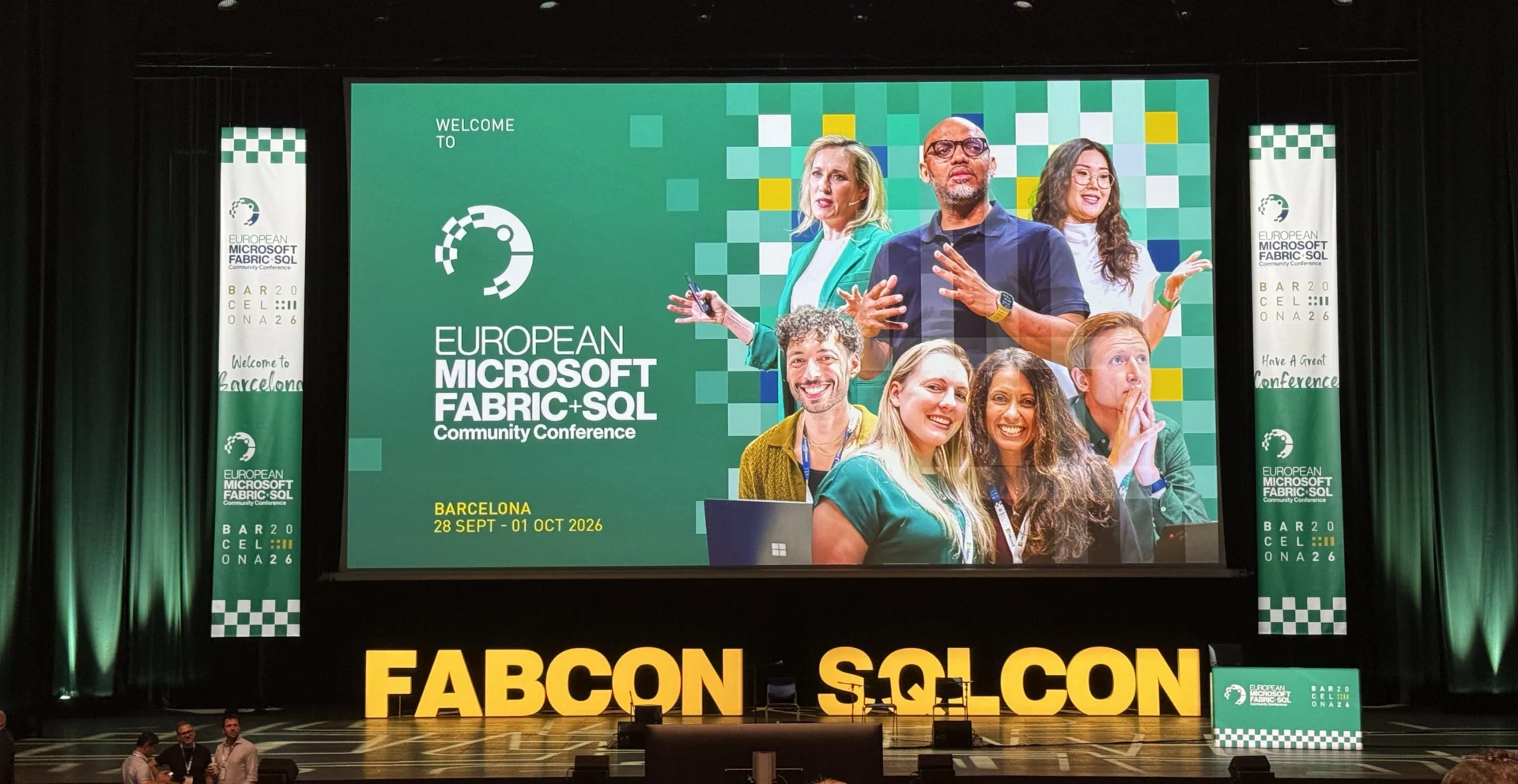
After returning from FabCon Europe in Barcelona, Oakland’s Rajan Chavda and Luke Elliott sat down with Sophie Brockie to share what they heard, what surprised them and what the latest announcements could mean for organisations using, or considering, Microsoft Fabric.
From stronger governance and more flexible capacity options to Fabric Apps, AI and better monitoring, their biggest takeaway was clear: the platform is maturing, and the opportunities to turn data into something people can use are growing with it.

Rajan Chavda, Senior Solutions Architect

Luke Elliot, Data Engineer
First of all, what was the atmosphere like at FabCon?
Luke: Bustling is probably the best word for it! There were a lot of people and it could get quite hectic between sessions, but there was a really good mix.
It wasn’t purely corporate and it wasn’t purely community-led. You had hands-on practitioners looking to upskill, business decision-makers trying to understand how Fabric could fit into their organisations, and people like us looking at where the product is heading and how we can bridge that gap for clients.
What stood out was the depth of the conversations. Because everyone was there specifically for Fabric, you could speak directly to product leads, engineers and other specialists and get into a level of detail that’s difficult to find elsewhere.
Rajan: I’d describe it as electric. FabCon is unusual because it isn’t a general data conference or a broad Microsoft event – it’s centred on one product. Everyone is there with a shared enthusiasm, expertise or desire to learn about Fabric, which gives you an immediate connection with the people around you.
Which announcements or conversations generated the most excitement?
Rajan: For me, a lot of the excitement was around Microsoft’s continued investment in governance and the platform itself.
Over the past few years, Fabric has gradually matured and become more enterprise-ready. We’ve seen progress in areas such as security, deployment and control, and governance now feels like a major focus. The introduction of more granular policies should give organisations greater flexibility in how they govern different teams and workloads.
Capacity was another important area. Microsoft is beginning to move beyond a purely fixed model and introduce more flexible options, including pay-as-you-go. That could make Fabric relevant and accessible to a wider range of organisations.
Luke: The AI announcements were exciting, of course, and I’m personally interested in agentic development. But as a consultant, the foundational work was what really caught my attention.
Fabric isn’t one product; it’s a collection of connected experiences. Historically, that has sometimes meant a smooth workflow until you cross from one part of the platform into another. It was encouraging to see some of those rough edges being smoothed out and the experience becoming more coherent.
Monitoring is a good example. Improvements to the monitoring hub should make it easier to investigate pipelines, troubleshoot problems and understand what’s happening without creating and maintaining bespoke solutions. Where a platform can handle something well out of the box, that allows us to spend more time on the work that creates value for the client.
“It’s a bit like getting a new phone. The headline features attract attention, but some of the most valuable updates are the security and platform improvements happening behind the scenes – the things you may not notice every day, but definitely wouldn’t want to be without.”
What did the event tell you about the direction Microsoft Fabric is heading?
Rajan: The overall direction hasn’t changed. Microsoft launched Fabric to strengthen its data platform capabilities and build on the success of Power BI. We’re still seeing significant investment in those core capabilities, alongside AI, real-time analytics and other newer areas.
The priority now is helping more organisations onto the platform and giving them solid foundations. Once those foundations are in place, they can start unlocking more creative use cases.
Luke: I agree, and I think the semantic layer is a particularly important part of that story. It’s one of the things that sets the Microsoft platform apart.
If an organisation has well-modelled data, clear definitions and strong semantic enrichment, it has already done much of the work required to become AI-ready. AI readiness isn’t a secret ingredient invented in the last two years. It comes back to familiar fundamentals: bringing data in reliably, modelling it well, governing it properly and being able to monitor it.
The more exciting AI capabilities become far easier to use when that groundwork has already been done.
Which capabilities do you think could make the biggest difference to organisations?
Luke: It depends on how an organisation is using Fabric, but conversational access to data could be huge for some businesses. Rather than asking people to leave the tools they use every day, go into Fabric and find an agent, the experience can sit within familiar workflows such as Teams, Outlook or Copilot.
I’m also interested in the planning capability. It has potential for teams working on budgeting, forecasting and financial planning, where the technical barrier needs to be low. For organisations already using Fabric, it could help solve a range of practical planning problems without introducing another separate tool.
Rajan: The integration with Microsoft 365 Copilot stood out to me too. It creates the potential for people to query and interact with Fabric data from an environment they already use, while changes to the licensing model could help lower the total cost of ownership for some larger organisations.
The other big area is Fabric Apps. They bring together reporting with capabilities such as write-back and application development, all within Fabric. That opens up possibilities beyond the traditional Power BI report.
Luke: Write-back is particularly useful. A dashboard might tell someone that something is wrong, but the action to resolve it could happen in another system, such as a CRM. Giving a user a simple way to tell Fabric, “I’ve fixed this,” closes that loop. It’s a practical capability that could make a real difference to everyday processes.
Did anything challenge or change how you think about Fabric?
Rajan: The developments in governance will change how we approach design for clients. Organisations can have teams with very different levels of maturity, particularly in hybrid or federated operating models.
More granular governance and security options should create greater flexibility, but they also change the foundations on which we design solutions.
That means we need to keep evolving our own delivery approach rather than relying on the patterns that worked yesterday.
Luke: For me, it was Data Factory. I have a heavily technical and engineering-led background, so I’m very comfortable working in code. But seeing the level of engineering behind some of the platform’s seemingly simple data movement capabilities made me reassess just how powerful the built-in tooling is.
It reinforced the importance of using what the platform gives you before reaching for a bespoke solution. Microsoft is bringing world-class engineering expertise to these capabilities. If an out-of-the-box feature can meet the need, it will often be easier for the client to understand, operate and maintain.
What should organisations be thinking about now?
Luke: If an organisation isn’t yet using Fabric, it should understand how much legacy technology exists in its data estate and whether it has a migration on the horizon. Moving platform is a significant decision, but it should be an active decision rather than something that keeps being pushed into the future without review.
For organisations already using Fabric, the questions are more operational. Do you have clearly defined data products? Is your operating model working in practice? Do you understand the governance and control surfaces? Are there clear owners? Has business-as-usual genuinely become business-as-usual, or is every morning still exceptional?
Getting that right creates the space to take advantage of new capabilities rather than spending all your time resolving access and operational issues.
Organisations with large Power BI estates should also look carefully at their semantic models. There may already be a huge amount of business knowledge and value embedded there. The opportunity is to consolidate where appropriate, apply strong modelling practices and move from a one-model-to-one-report mindset towards reusable data products that can serve many purposes.
Rajan: The pace of change is the big consideration. FabCon takes place a couple of times a year, but there are announcements at other Microsoft events, monthly updates and near-daily product changes.
Whatever platform an organisation chooses, somebody needs to own that change: keeping up with the roadmap, identifying worthwhile use cases and understanding the potential value and return on investment. Technology is only one part of the answer; the operating model around it is fundamental.
What are you most excited to bring back to Oakland’s clients and teams?
Rajan: I’m excited to help people think beyond the default approach of building a data product and placing a Power BI report on top of it.
A well-built data platform is valuable, but it won’t deliver a return if nobody engages with it. We now have a much broader menu of ways to surface data—from reports and self-service experiences to AI and accessible drag-and-drop capabilities. The important thing is to understand the user and choose the right experience for the decision or action they need to take.
Luke: One practical area is access control. The direction Microsoft is taking should make permissions easier to understand, administer and maintain, which is especially valuable for clients whose Fabric administrators also look after Azure or a wider cloud estate.
On a more experimental level, I’m also watching Project Osmos, Microsoft’s agentic data engineering work. The idea of giving an agent a larger development task and allowing it to work over an extended period could be very useful for quickly proving concepts and testing whether an idea has value. That could help consultants spend more time understanding the business problem and less time creating early technical demonstrations.
Ultimately, that is where good consultancy adds value. It isn’t simply about knowing how to build something. It’s about understanding the decision or action a business wants to take, looking at the data available and working out how to bring the two together.
Finally, how would you sum up the future of Microsoft Fabric?
Luke: “The more boring it is, the more exciting it is.”
The less time organisations need to spend worrying about the platform fundamentals, the more time they can spend using their data to create value.
Rajan: “Not slowing down.”
With the pace of development across the platform, that feels like a fitting place to leave it.
Oakland is a Microsoft Fabric Featured Partner. We help organisations understand where Fabric can add value, establish the right data foundations and turn the platform’s capabilities into practical outcomes for their people and customers.
Our MS Fabric Experience in Action

Rebuilding a data platform from the ground up with Microsoft Fabric
Our client is one of the UK’s leading transport organisations. Facing increasing business challenges, it needed to take full control of its data.
Building a Data-Driven Professional Services Firm: A Data Strategy Journey
A leading UK accountancy and advisory firm on an exciting growth journey, expanding both organically and through acquisitions, needed the data capability to scale with it.